
Description
Abstract ? Blind Person?s Smart Stick Using Arduino, GPS, GSM, Ultrasonic Sensor, LDR, and Water Sensor
1. Introduction
Visual impairment significantly affects an individual?s independence, mobility, and safety. For many blind and visually impaired individuals, navigation in unfamiliar or obstacle-rich environments can be dangerous. Traditional walking canes provide limited tactile feedback and require the user to physically contact an obstacle before detection. This not only slows down movement but can also lead to accidents.
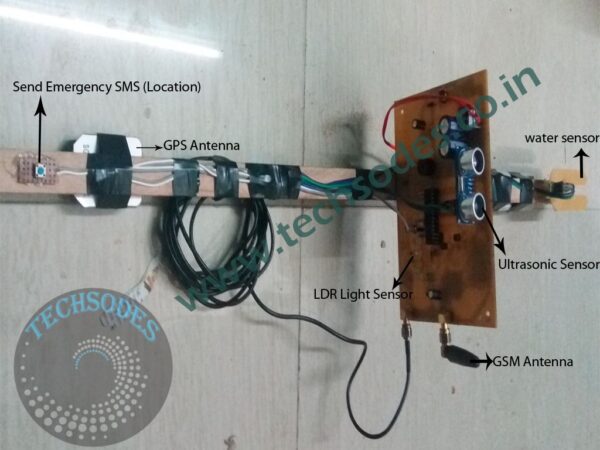
The Blind Person?s Smart Stick is designed as a modern assistive device that combines Arduino microcontroller technology with a set of advanced sensors?ultrasonic sensor, light-dependent resistor (LDR), water sensor, GPS, and GSM module?to improve navigation, enhance safety, and provide real-time location tracking. By integrating obstacle detection, environmental awareness, water hazard alerts, and emergency communication into a single device, the smart stick offers a more proactive solution for visually impaired users.
2. System Overview
The system operates as a multi-sensor detection and communication platform mounted inside a walking stick. Each sensor performs a specific role, while the Arduino microcontroller processes the incoming data, makes decisions, and controls outputs such as the buzzer or GSM module.
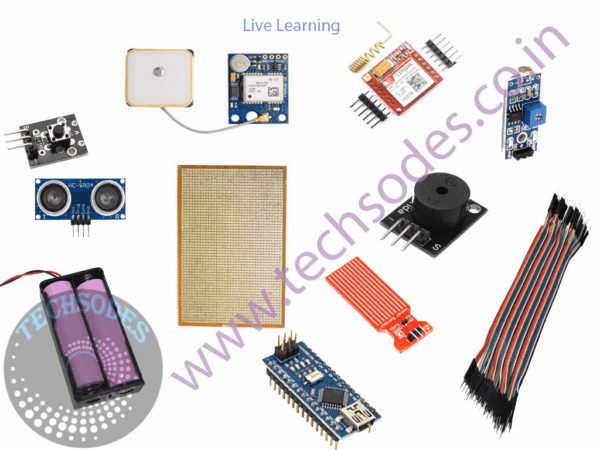
Key components:
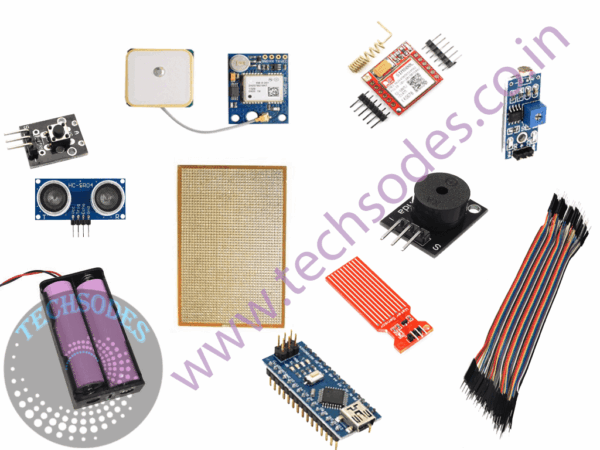
- Arduino Board: Central controller for sensor data processing and decision-making
- Ultrasonic Sensor (HC-SR04): Measures distance to nearby objects
- LDR (Light-Dependent Resistor): Detects ambient lighting levels
- Water Sensor: Detects wet or slippery surfaces
- GPS Module: Provides real-time location coordinates
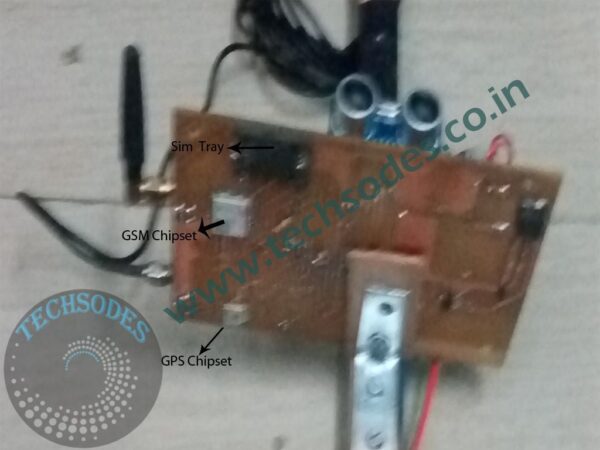
- GSM Module: Sends and receives SMS messages for emergency alerts and location sharing
- Buzzer: Provides audio alerts with distinct beep patterns for different situations
- Emergency Push Button: Allows immediate distress signaling
3. Functional Modules
3.1 Ultrasonic Obstacle Detection
The HC-SR04 ultrasonic sensor continuously scans the front path for obstacles by transmitting ultrasonic pulses and measuring the time taken for the echo to return. Based on measured distances:
- Distance > 150 cm: No obstacle detected; buzzer remains off.
- 30 cm < Distance ? 150 cm: Variable delay beeping; closer obstacles produce faster beeps, giving an intuitive sense of proximity.
- Distance ? 30 cm: Continuous buzzer sound to signal immediate danger.
This system provides non-contact detection, allowing the user to avoid obstacles without physical collision.
3.2 Light Detection with LDR
The LDR sensor measures the surrounding light intensity. If light levels drop below a defined threshold (indicating nighttime or a dark indoor space), the Arduino triggers a unique buzzer pattern to notify the user.
Distinct audio signaling ensures the user can differentiate between an obstacle warning and a night mode notification. This function improves orientation in changing environmental conditions.
3.3 Water Detection
A water sensor is embedded near the base of the stick to detect moisture or standing water. When water is detected, a special beep pattern warns the user of a wet or slippery surface ahead, helping prevent slips and falls.
This feature is especially useful during rainy weather, near puddles, or in areas with poor drainage.
3.4 Emergency Alert System
A push button is located on the stick handle. When pressed:
- The Arduino triggers the GSM module to send an SMS alert.
- The alert message contains the current GPS coordinates retrieved from the GPS module.
- The message is sent to two pre-configured phone numbers belonging to relatives or guardians.
This feature ensures that even in unfamiliar or dangerous situations, help can be summoned immediately.
3.5 GSM-Based Location Requests
The system allows two-way communication with the GSM module:
- Relatives can send a predefined SMS command to the device.
- Upon receiving this request, the Arduino retrieves the latest GPS coordinates.
- The GSM module sends back an SMS with location details, enabling real-time tracking.
This feature is valuable for caregivers monitoring the user?s safety without needing constant physical supervision.
3.6 GPS Location Tracking
The GPS module provides location data in real time, used in two ways:
- Emergency Alerts: Automatically included in the SOS message when the emergency button is pressed.
- Location Requests: Sent in response to an SMS request from authorized phone numbers.
This ensures geographic traceability, enhancing both independence and safety for the user.
4. Hardware Design
The stick?s electronics are powered by a rechargeable Li-ion battery pack or 9V battery. Power management is optimized to ensure long operation between charges.
- Arduino Microcontroller: Chosen for its ease of programming and sensor compatibility.
- Buzzer: Low-power piezo buzzer for audible alerts.
- Modules: Mounted in a compact enclosure integrated into the stick?s handle.
- Sensors: Positioned for optimal detection?ultrasonic sensor at the top front, water sensor near the tip, LDR on top for ambient light detection.
5. Working Principle
The Arduino constantly reads sensor inputs, processes the values, and maps them to specific output actions. Each detected condition triggers a distinct buzzer pattern:
- Obstacle Warning: Variable or continuous beeps depending on distance.
- Night Mode Alert: Low-frequency repetitive beeps.
- Water Alert: Patterned triple-beeps.
- Emergency SOS: Immediate SMS with GPS coordinates.
6. Safety and Usability Enhancements
- Distinct Audio Codes: Different beep patterns prevent confusion in multi-hazard environments.
- Real-Time Communication: GSM ensures instant communication even in remote areas.
- Hands-Free Operation: All sensor monitoring is automatic; only the emergency button requires manual activation.
- Portable & Lightweight: Designed to maintain the convenience of a regular walking stick.
7. Advantages
- Comprehensive Hazard Detection: Covers obstacles, low light, and slippery surfaces.
- Improved Safety: Emergency SOS system ensures quick assistance.
- Independence: Allows visually impaired users to navigate with minimal outside help.
- Low Cost & Accessible: Built from widely available electronic components.
- Customizable Alerts: Thresholds and beep patterns can be adjusted in the code.
8. Applications
- Primary mobility aid for blind or visually impaired individuals.
- Navigation assistance in unfamiliar urban and rural environments.
- Emergency alert device for elderly individuals with mobility limitations.
9. Future Enhancements
- Voice Feedback: Replace beeps with spoken alerts for even clearer hazard differentiation.
- Obstacle Direction Indication: Use multiple ultrasonic sensors to specify left/right positioning of obstacles.
- Bluetooth Integration: Send alerts and location data to a smartphone app.
- Rechargeable Solar Power: Extend battery life using integrated solar panels.
- Camera Module: Capture short image/video clips when the SOS button is pressed for added context.
10. Conclusion
The Blind Person?s Smart Stick is a practical, reliable, and cost-effective solution that enhances safety, independence, and confidence for visually impaired users. By integrating obstacle detection, lighting condition alerts, water hazard warnings, and emergency communication into a single portable device, it significantly improves the ability of users to navigate unfamiliar or challenging environments.
The combination of Arduino control, ultrasonic sensing, LDR-based light detection, water hazard monitoring, GPS location tracking, and GSM-based communication creates a robust multi-functional assistive device. The modular design also allows for easy upgrading, ensuring that the stick can evolve with emerging technologies and user needs.


Reviews
There are no reviews yet.