


Description
Abstract -?Fingerprint-Based Security System Using 8051 Microcontroller and R305 Module
The Fingerprint-Based Security System is an advanced biometric access control solution built around the 8051 microcontroller and R305 fingerprint module, designed to provide secure, efficient, and user-friendly access management. Unlike conventional security systems that rely on keys, PIN codes, or cards?which can be lost, stolen, or shared?this system uses fingerprint authentication, which is unique to each individual and difficult to replicate.
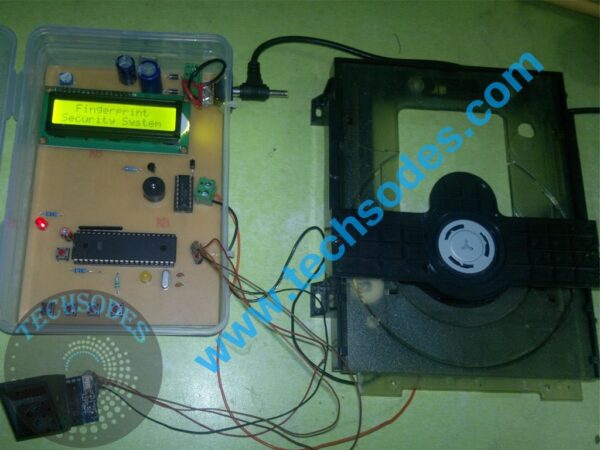
A standout feature of this implementation is the use of a CD loader mechanism as the door actuator. This provides a compact and cost-effective alternative to traditional door locks. Furthermore, the system integrates a “Delete” function, enabling administrators to remove stored fingerprints with ease, offering dynamic and flexible control over access permissions.
The combination of biometric verification, mechanical innovation, and an intuitive user interface makes this project a practical and secure access control solution for small offices, laboratories, storage rooms, and other restricted areas.
1. Introduction
Security has become a critical concern in both residential and commercial applications. Traditional access systems such as keys and PIN codes present security vulnerabilities:
- Keys can be duplicated or stolen.
- PIN codes can be guessed or shared.
- Cards can be misplaced or forged.
Biometric systems overcome these limitations by using unique human characteristics, such as fingerprints, for authentication. Fingerprints are:
- Unique for every individual.
- Difficult to replicate.
- Persistent throughout a person?s lifetime.
This project leverages fingerprint authentication for high security, powered by the 8051 microcontroller and an R305 optical fingerprint module. The innovative use of a CD loader mechanism as the lock actuator reduces system size and cost while maintaining reliability.
2. System Overview
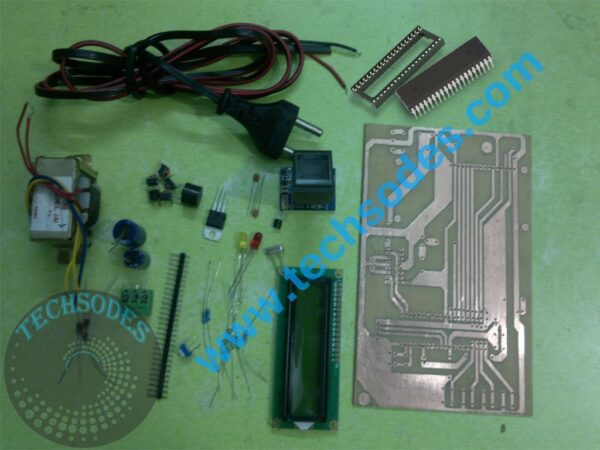
The system is built around five major components:
2.1 Microcontroller Unit (MCU)
- Model: AT89S52 from the 8051 family.
- Function: Acts as the central processing unit, handling:
- Communication with the R305 fingerprint module.
- Processing of enrollment, verification, and deletion commands.
- Control of the CD loader mechanism through the L293D motor driver.
- LCD display interface for user feedback.
- Button interface for adding, deleting, and navigating through fingerprint IDs.
2.2 Fingerprint Module (R305)
- Features:
- Optical sensor for capturing fingerprints.
- DSP (Digital Signal Processing) chip for image processing and template generation.
- Inbuilt memory to store multiple fingerprint templates (up to 256 IDs).
- UART serial communication with the microcontroller.
- Functions in the system:
- Enrollment of new fingerprints.
- Verification of scanned fingerprints against stored templates.
- Deletion of specific IDs upon administrator request.
2.3 Door Actuator ? CD Loader Mechanism
- Reason for use: The ejection and retraction mechanism of a CD loader offers a compact, motor-driven lock/unlock action.
- Working:
- Upon successful verification, the microcontroller signals the motor driver to eject the tray, simulating an ?unlock? operation.
- After a set time or upon exit, the tray is retracted to lock the ?door? again.
2.4 Control Buttons
- Add Button: Initiates enrollment of a new fingerprint.
- Delete Button: Removes a stored fingerprint by ID.
- Up & Down Buttons: Used for navigating through stored IDs during add/delete operations.
2.5 Display Unit
- 16?2 LCD Display:
- Shows system prompts, status messages, and operation results.
- Guides administrators through the enrollment and deletion process.
- Displays ?Access Granted? or ?Access Denied? during verification.
3. Working Principle
3.1 Fingerprint Enrollment
- Administrator presses Add button.
- LCD prompts ?Select ID?.
- Using Up/Down buttons, an unused ID is selected.
- The user is prompted to place their finger on the scanner.
- R305 captures the fingerprint twice for accuracy and stores it in memory under the selected ID.
- LCD confirms with ?Fingerprint Stored? message.
3.2 Fingerprint Verification
- User places their finger on the scanner.
- R305 compares the scanned fingerprint against all stored templates.
- If match found:
- Microcontroller sends a command to L293D motor driver.
- CD loader ejects, unlocking the ?door.?
- LCD displays ?Access Granted?.
- If no match:
- CD loader remains locked.
- LCD displays ?Fingerprint Not Match?.
3.3 Fingerprint Deletion
- Administrator presses Delete button.
- LCD prompts ?Select ID to Delete?.
- Using Up/Down buttons, desired ID is selected.
- Pressing Delete again confirms removal.
- R305 erases the fingerprint data from the selected ID.
- LCD displays ?Fingerprint Deleted?.
3.4 Exit Procedure
- For exit, the same authorized fingerprint is scanned again, and the system repeats the unlock process.
4. Hardware Components and Specifications
| Component | Specification / Model | Purpose |
|---|---|---|
| Microcontroller | AT89S52 (8051 family) | Main control logic |
| Fingerprint Sensor | R305 Optical Module | Fingerprint capture & matching |
| Motor Driver IC | L293D | Drives CD loader motor |
| Door Actuator | CD Loader Mechanism | Lock/unlock function |
| Display Unit | 16?2 LCD | User interface |
| Push Buttons | 4 tactile switches | Add/Delete/Up/Down controls |
| Power Supply | 5V regulated supply | Powers electronics |
5. Advantages of the Delete Function
The Delete feature significantly enhances system flexibility and security:
- Dynamic User Management ? Quickly revoke access without reprogramming the entire system.
- Improved Security ? Prevents ex-employees or unauthorized individuals from accessing the area.
- Scalable Access Control ? IDs can be reused by deleting old ones and adding new fingerprints.
- Easy Maintenance ? No need for complex commands or software tools; deletion is done via buttons.
6. Applications
This system can be deployed in:
- Small Offices ? Secure entry to staff-only areas.
- Laboratories ? Prevent unauthorized access to sensitive research areas.
- Storage Rooms ? Protect valuable inventory or documents.
- Educational Institutions ? Restricted access to exam papers or equipment rooms.
- Residential Buildings ? Personal security for rooms or lockers.
7. Future Scope
- Integration with GSM/Wi-Fi Modules ? Send alerts on unauthorized access attempts.
- Battery Backup ? Maintain functionality during power outages.
- Logging Feature ? Store access timestamps for audit purposes.
- Multi-Factor Authentication ? Combine fingerprint with PIN or RFID.
- Mobile App Control ? Remote management of stored fingerprints.
8. Conclusion
The Fingerprint-Based Security System with Delete Function offers a compact, cost-effective, and highly secure method of controlling access. Its use of the 8051 microcontroller and R305 fingerprint sensor ensures reliable biometric authentication, while the CD loader mechanism introduces an innovative approach to door actuation.
The addition of the Delete button transforms the system from a static access control method into a dynamic, administrator-friendly platform. It allows quick addition and removal of users, making it ideal for environments where access permissions change frequently. With minimal hardware requirements, low power consumption, and high reliability, this system is a strong candidate for real-world deployment in both commercial and personal security applications.



Reviews
There are no reviews yet.