
Description
Abstract – Pedometer Wireless Monitoring on PC
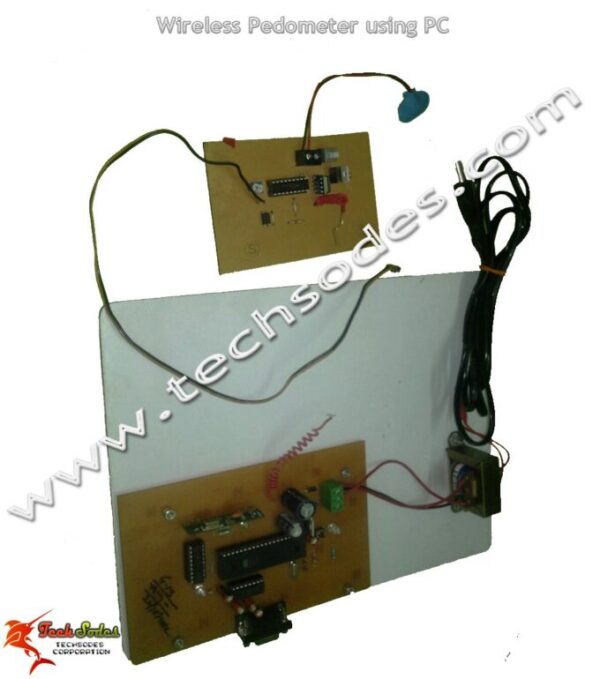
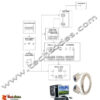
This project presents the design and implementation of a?Wireless Pedometer Monitoring System?that can transmit real-time step count data from a remote location to a personal computer for analysis and display. The system is composed of?two distinct units: a?transmitter unit, which is worn by the user and is responsible for detecting steps and sending the data wirelessly, and a?receiver unit, which is connected to a computer to collect, decode, and display the information through a dedicated software application developed in?VB.NET.
The primary objective of this project is to provide a?low-cost, reliable, and accurate step-count monitoring solution?with the capability of wireless transmission over a 433 MHz RF link. Unlike common pedometers that store the data locally, this system continuously sends step count information to a monitoring station, allowing for?real-time observation,?logging, and?further data analysis?on a computer. This makes the design particularly suitable for?sports training, health monitoring, physiotherapy, and remote fitness tracking?applications.
System Overview
The system is divided into two functional blocks:
1. Transmitter Unit (Wearable Module)
The transmitter unit is designed to be compact, lightweight, and portable so it can be comfortably worn by the user, such as on a shoe or ankle strap. The step detection mechanism is implemented using a?push-button switch?that is strategically positioned to trigger once for every step taken by the user. Each press of the push button generates a digital pulse, which is then fed to an?HT12E encoder IC.
The?HT12E?encodes the pulse into a data frame suitable for wireless transmission. This encoded signal is transmitted through a?433 MHz RF transmitter module, which is a low-power, license-free communication device ideal for short- to medium-range data transfer. The transmitter unit is powered by a?9 V battery, ensuring complete mobility and independence from wired power sources. The current consumption is low, making the unit capable of operating for long durations on a single battery.
2. Receiver Unit (PC Interface Module)
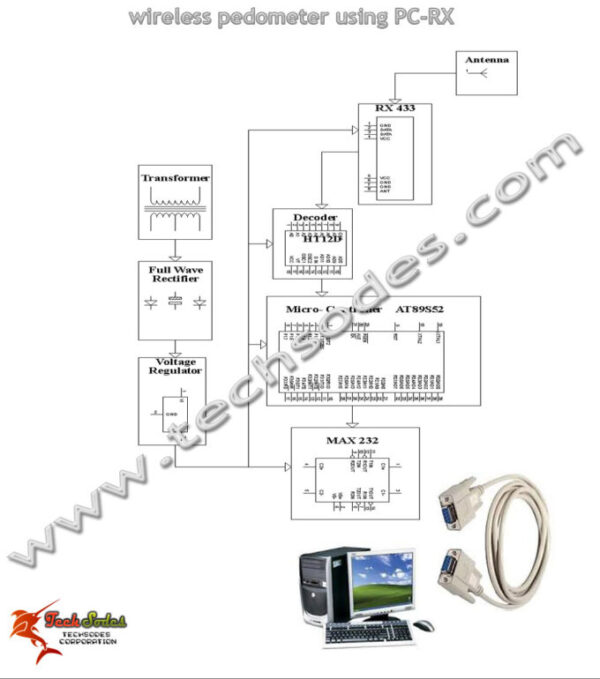
The receiver unit consists of a?433 MHz RF receiver module?that continuously listens for the transmitted signals. When a valid encoded packet is received, it is sent to an?HT12D decoder IC. The decoder translates the received encoded signal back into the original digital pulse data corresponding to each detected step.
The decoded step count signal is then processed by an?AT89S53 microcontroller?(8051 family). This microcontroller counts the received step pulses, maintains an ongoing tally, and communicates the data to a PC via?RS232 serial communication. The design includes a?MAX232 level converter circuit?to ensure proper voltage level matching between the microcontroller (TTL level) and the PC?s RS232 port.
The receiver unit is powered by a transformer-based regulated power supply, ensuring continuous operation without the need for batteries on the PC side.
PC Software (VB.NET Application)
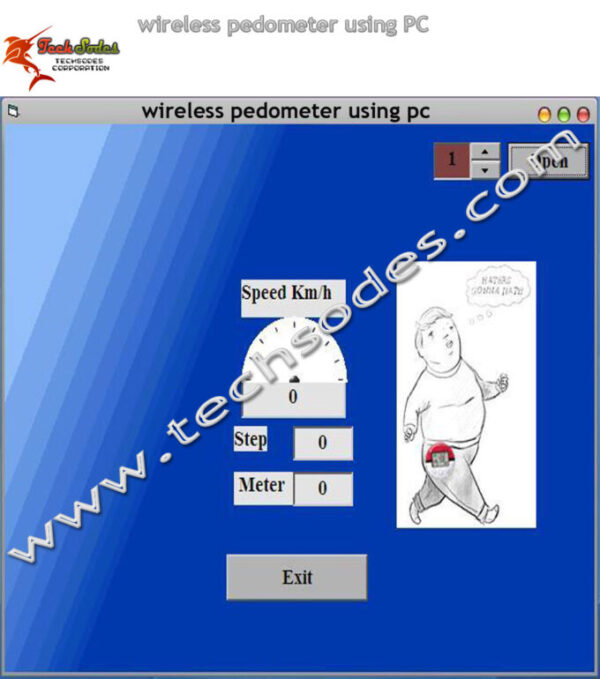
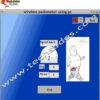
A?custom software application?was developed using?Visual Basic .NET?to display the step count data received from the microcontroller in real time. The software continuously reads the incoming serial data, parses it, and updates the user interface with the current step count.
Key features of the software include:
- Real-Time Step Display?? Instant updates as steps are detected and transmitted.
- Data Logging?? Option to save step count history for later analysis.
- User-Friendly Interface?? Large, clear font and minimal clutter for easy reading during physical activity.
- Reset & Start/Stop Controls?? Allows the operator to reset the counter or pause data acquisition.
- Serial Port Configuration?? Lets the user select the COM port and baud rate for communication.
The VB.NET environment was chosen for its?simplicity, rapid development capabilities, and compatibility with Windows PCs.
Working Principle
- Step Detection:
- The push-button sensor closes momentarily whenever the user takes a step.
- This closure generates a digital pulse, which represents a single counted step.
- Encoding & Transmission:
- The HT12E encoder receives the digital pulse and creates an encoded data frame.
- This frame is modulated and transmitted over the air at 433 MHz by the RF transmitter.
- Reception & Decoding:
- The 433 MHz RF receiver at the second unit captures the transmitted signal.
- The HT12D decoder extracts the original pulse information from the encoded frame.
- Microcontroller Processing:
- The AT89S53 microcontroller counts the number of received pulses.
- The microcontroller formats the count data and sends it to the PC via RS232.
- PC Display & Logging:
- The VB.NET application on the PC receives the count data.
- The software displays the current step count and optionally logs the data for records.
Advantages of the System
- Wireless Operation:
No physical connection between the user and the PC, allowing complete freedom of movement. - Real-Time Monitoring:
Data is updated instantly, enabling live observation of the user?s step count. - High Accuracy:
Uses a direct mechanical trigger method, avoiding the false positives and algorithmic errors common in accelerometer-based pedometers. - Simple & Cost-Effective:
Uses low-cost, readily available RF modules and 8051-family microcontrollers. - Scalable:
Can be extended to measure multiple parameters such as distance walked, calories burned, or walking speed by adding software features.
Applications
- Sports Training:?Coaches can monitor athletes? movement activity during drills.
- Medical Rehabilitation:?Physiotherapists can track patients? walking exercises remotely.
- Research Studies:?Fitness and gait studies can collect precise step counts over time.
- Workplace Health Programs:?Encourages employees to walk more and track their daily activity.
- Remote Elderly Monitoring:?Family members or caregivers can monitor activity levels of elderly individuals.
Future Enhancements
- Bluetooth or Wi-Fi Upgrade:?Replace the 433 MHz RF link with Bluetooth or Wi-Fi for easier integration with smartphones and cloud platforms.
- Multi-User Capability:?Assign different RF codes for multiple pedometer transmitters to track several users at once.
- Rechargeable Power Supply:?Add a lithium-ion battery with USB charging to the transmitter unit.
- Advanced Analytics:?Include charts, graphs, and progress tracking in the PC software.
- Integration with Health Platforms:?Send data directly to fitness apps like Google Fit or Apple Health via a gateway application.
Conclusion
The?Pedometer Wireless Monitoring on PC?project demonstrates a practical, reliable, and affordable method of tracking step count remotely. By using?simple push-button-based step detection?and?433 MHz RF transmission, the system eliminates the complexity of motion sensors while delivering high accuracy. The use of an?AT89S53 microcontroller?for data processing, combined with?VB.NET software?for user-friendly display, results in a complete end-to-end solution suitable for sports, healthcare, and research applications.
This project serves as a foundation for more advanced wireless health and fitness monitoring systems, where real-time data, remote access, and ease of use are crucial. The modular design allows for easy upgrades and customizations to suit a wide range of applications in both personal and professional settings.

Reviews
There are no reviews yet.